News
FEADER grants for energy efficiency: solar panels, LED lighting and aerothermal systems in agri-food industries
- 06/07/2026
- Energy Efficiency Grants
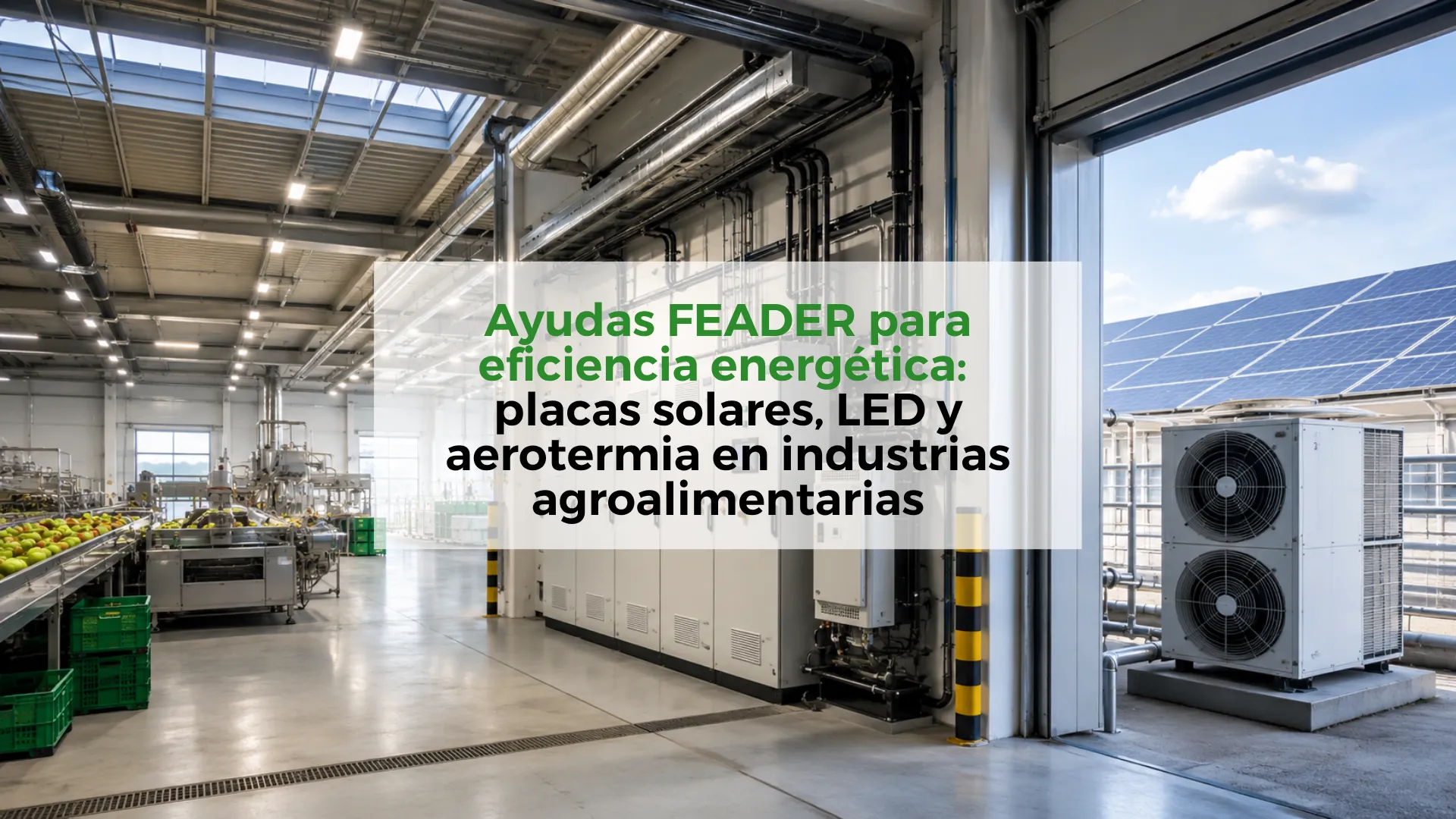
FEADER grants for energy efficiency in agri-food industries are an opportunity to invest in solar panels, LED lighting, aerothermal systems, electrical installations, transformer stations, automation and consumption improvements. The call is open until 25 July 2026 and investments can be executed until June 2028, allowing energy projects to be planned with sufficient margin.
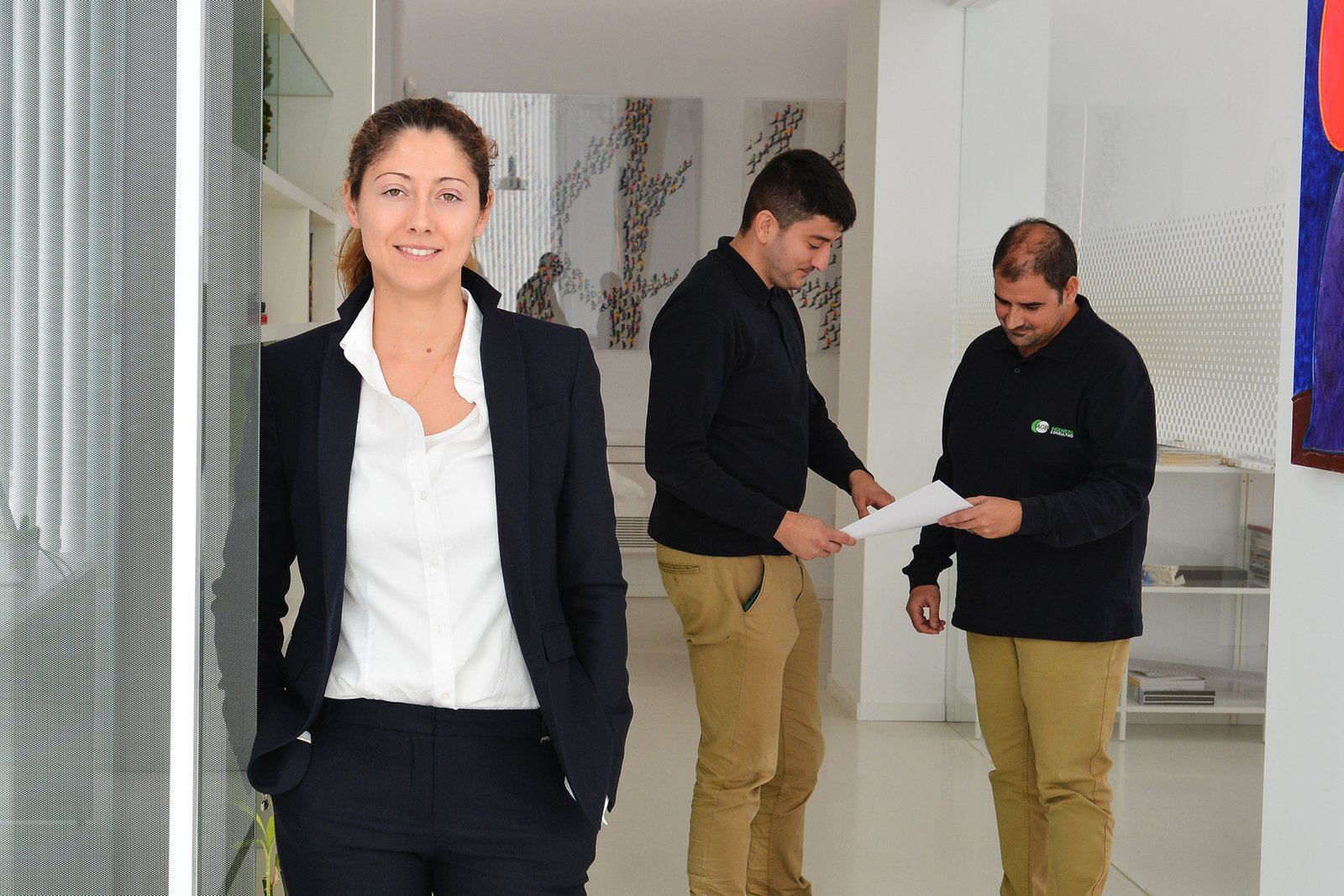
By Ana González, CEO and Agricultural Engineer – Industrial consultant in energy efficiency and grant management at AGB Ingeniers
Throughout all these years supporting agri-food companies in the Valencian Community, I have seen how energy efficiency has gone from being a recommended improvement to becoming a strategic necessity. The cost of energy, the need to produce with greater control and the need to maintain increasingly competitive facilities lead many industries to consider investments in solar panels, LED lighting, aerothermal systems, electrical installations, automation or consumption improvements. And, in many cases, these decisions do not only reduce costs: they help the company work better, with greater stability and a clearer vision for the future.
At AGB Ingeniers, we have seen first-hand what it means for a company to be able to access FEADER grants. For many industries, these grants have provided the necessary boost to carry out investments they already knew they needed, but which required planning, security and financial support. We have supported projects in which an energy improvement has made it possible to modernise a plant, prepare an expansion, renew auxiliary installations or reduce consumption that was affecting the daily profitability of the business.
That is why, when we talk about FEADER grants for energy efficiency, we are not talking only about a subsidy. We are talking about a real opportunity for agri-food industries in the Valencian Community to grow, invest with criteria and move towards more efficient and competitive facilities. My experience tells me that the difference lies in preparing the project well from the beginning: analysing the investment, technically justifying it, organising the documentation and turning a need for improvement into a solid, coherent file prepared to access the grant.
Little time to apply, but a major opportunity to execute
The agri-food industry, and especially the fruit and vegetable industry in the Valencian Community, has an important opportunity to improve its facilities, reduce energy costs and prepare strategic investments between now and 2028.
FEADER grants are already active, but the call is open only until 25 July 2026. This means that interested companies must act now, review their planned investments and prepare the necessary documentation as soon as possible.
At the same time, the execution period for investments extends until June 2028. This combination is key: there is little time left to submit the application, but there is a long period to execute energy efficiency, facility modernisation and process improvement projects.
For many fruit and vegetable companies, citrus warehouses, packing centres and food industries, this call can be an opportunity to address investments that have been on the table for some time: solar panels, lighting renewal, electrical improvements, aerothermal systems, automation, electrical cabinets, transformer stations or systems that allow the company to work more efficiently.
At AGB Ingeniers we help agri-food companies analyse whether their investments can benefit from FEADER grants, prepare the technical and administrative documentation, justify the project and process the application with a technical, strategic and results-oriented vision.
Energy efficiency: an increasingly important necessity
Energy costs have become one of the major challenges for the food industry. Companies need to produce, preserve, transform, package and distribute with increasingly demanding facilities, but also with greater control over their consumption.
In a fruit and vegetable centre, electricity consumption may be linked to packing lines, cold storage chambers, refrigeration systems, packaging machinery, lighting, internal transport, automation, compressed air or auxiliary installations. In other food sectors, consumption may be related to thermal processes, preservation, production, cleaning, pumping, ventilation or air conditioning.
For this reason, investing in energy efficiency should not be seen only as an environmental improvement. It is a business decision that can help reduce costs, improve competitiveness, strengthen plant stability and prepare the industry to work with greater control.
FEADER grants allow these investments to be studied from a broader perspective: not only as a one-off subsidy, but as an opportunity to modernise facilities and make them more efficient before June 2028.
Which energy efficiency investments can benefit from FEADER grants
Within investments linked to the improvement of agri-food facilities, FEADER grants can include different actions related to energy efficiency, electrical installations and the modernisation of auxiliary systems.
Among the investments that can be analysed are photovoltaic solar panels, LED lighting, aerothermal systems, transformer stations, electrical installations, automation, electrical cabinets and other improvements aimed at reducing consumption or improving plant performance.
Actions related to wastewater treatment equipment, ozone treatment, zero-discharge installations or auxiliary systems that improve the general operation of the industry can also be studied.
The key is to review each investment within the company’s real project. Not all actions fit in the same way and not all are justified in the same manner. That is why it is important to analyse each case with technical criteria before preparing the application.
Solar panels for agri-food industries
Solar panels are one of the most attractive investments for many agri-food industries. They make it possible to generate part of the energy consumed by the company, reduce dependence on the grid and improve the predictability of energy costs.
In fruit and vegetable companies, where campaigns can concentrate large volumes of work and high consumption levels, a well-sized photovoltaic installation can help improve the overall efficiency of the plant.
However, an investment in solar panels should not be analysed in isolation. It is necessary to study actual consumption, working hours, the power required, the available roof area, the relationship with other equipment and integration with the rest of the electrical installation.
Within the framework of FEADER grants, a photovoltaic installation can form part of a broader energy modernisation strategy. That is why it is advisable to prepare the project in advance and correctly justify its need within the agri-food activity.
LED lighting, electrical installations and automation
Energy efficiency does not depend only on major investments. In many industries, renewing lighting, updating electrical installations or incorporating automation can have a significant impact on consumption, safety and day-to-day operation.
LED lighting makes it possible to improve illumination in work areas, reduce consumption and adapt the plant to more efficient conditions. In fruit and vegetable warehouses, packing areas, dispatch areas, cold rooms, loading docks or handling areas, good lighting also influences the quality of work and the safety of operations.
Electrical installations and electrical cabinets are another fundamental part. A growing industry needs its installations to support that growth. New production lines, machinery, industrial refrigeration or automation require a well-planned electrical infrastructure.
Automation can also help control consumption, improve processes, reduce errors and optimise plant operation. In many cases, efficiency does not only mean consuming less, but working better.
Aerothermal systems and energy solutions for the food industry
Aerothermal systems can also be an interesting solution in certain agri-food projects, especially when the company needs to improve thermal systems, air conditioning or energy production for specific industrial uses.
As with any energy investment, its viability depends on the process, real demand, the environment and integration with the rest of the facilities. It is not about incorporating technology because it is a trend, but about studying whether it responds to a specific need of the company.
FEADER grants can be an opportunity to analyse this type of solution within a broader energy strategy, provided that they are correctly justified and linked to the agri-food project.
Until when can FEADER grants for energy efficiency be applied for?
FEADER grants for energy efficiency in agri-food industries can be applied for until 25 July 2026. Eligible investments, such as solar panels, LED lighting, aerothermal systems, transformer stations, electrical installations, automation or consumption improvements, may be executed until June 2028.
This execution period allows companies to plan investments with a medium-term vision. However, in order to take advantage of it, the application must be correctly prepared within the call deadline.
That is why now is the time to review the project.
Wanting to invest is not enough: the file must be well prepared
One of the most common mistakes in this type of grant is thinking that having a planned investment is enough. In reality, a FEADER grant application requires correctly identifying the eligible items, preparing comparable quotations, technically justifying the need for each action, organising the administrative documentation and submitting a coherent file.
In energy efficiency projects, it is also important to clearly explain what improvement is intended, what role the investment plays within the plant and how it contributes to modernising the industry.
A well-prepared application can avoid delays, correction requests and subsequent problems. Above all, it makes it possible to present the project with greater solidity.
At AGB Ingeniers, we support companies from the initial investment analysis to document preparation, the technical report, application processing and file follow-up.
The role of AGB Ingeniers in FEADER grants
At AGB Ingeniers, we work with agri-food companies that need to invest in energy efficiency, machinery, industrial refrigeration, auxiliary installations and process improvement.
Our experience in FEADER grants and in engineering projects for the agri-food industry allows us to approach each application from a technical and practical perspective. We do not limit ourselves to processing documentation: we analyse the investment, review its fit, prepare the technical justification and help organise the file from the beginning.
For a company, having a specialised engineering firm can make the difference between an improvised application and a well-planned, well-documented project prepared to access the grant.
An opportunity to reduce costs and modernise the industry
FEADER grants for energy efficiency are an opportunity for the agri-food industry to move forward with investments that improve its competitiveness.
Solar panels, LED lighting, aerothermal systems, transformer stations, electrical installations, automation and consumption improvements can help reduce costs, improve plant operation and prepare the company for the coming years.
But the call has a clear deadline: 25 July 2026.
Although investments may be executed until June 2028, the application must be prepared now. At AGB Ingeniers, we help agri-food companies in the Valencian Community transform their energy investments into solid, justified projects prepared to access the available grants.
Frequently asked questions about FEADER grants for energy efficiency
Until when is the call for FEADER grants for energy efficiency open?
The call for FEADER grants for agri-food industries is open until 25 July 2026. Companies that want to invest in solar panels, LED lighting, aerothermal systems, electrical installations or consumption improvements must prepare their application before that date.
Until when can eligible investments be executed?
The eligible investments of this call can be executed until June 2028. This allows energy efficiency projects to be planned with sufficient margin, provided that the application has been correctly submitted within the established deadline.
Can solar panels be included in FEADER grants?
Yes. Solar panels can form part of eligible investments when they are linked to the agri-food activity and are correctly justified within the modernisation or energy efficiency project.
Can LED lighting, aerothermal systems or electrical installations be included?
Yes. Investments in LED lighting, aerothermal systems, transformer stations, electrical installations, automation, electrical cabinets and other improvements related to energy consumption and plant operation can be analysed.
Why is it advisable to prepare the grant with a specialised engineering firm?
Because a FEADER application requires reviewing the fit of the investment, preparing documentation, technically justifying the project, organising comparable quotations and submitting a solid file. A specialised engineering firm such as AGB Ingeniers helps work on the application with greater confidence from the outset.