
News
Legalisation of Level 2 cold storage chambers in food industries: safety, control and peace of mind for your company
- 08/06/2026
- Innovation
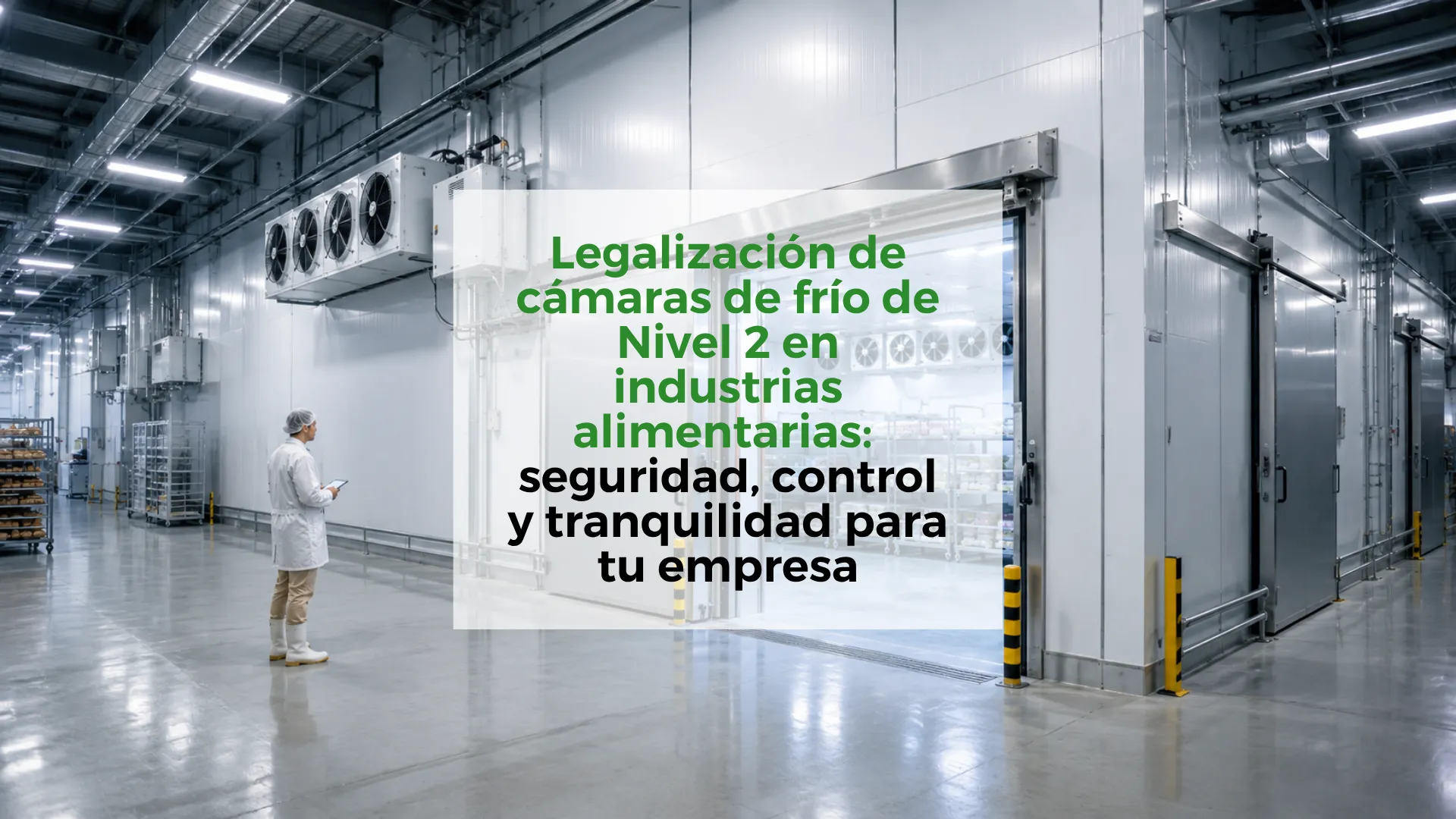
A Level 2 cold storage chamber is not just a refrigeration unit. It is a strategic part of the food industry. Product preservation, installation safety, production continuity and the company’s peace of mind when facing any future inspection, expansion or procedure depend on it.
By Ana González, CEO and Agricultural Engineer – Industrial Consultant in energy efficiency and grant management at AGB Ingeniers
The legalization of Level 2 cold storage chambers is a key step for any food industry that needs to preserve products, expand facilities or ensure the proper operation of its refrigeration system. At AGB Ingeniers, we help companies organize, document and process their industrial refrigeration installations with a technical, practical approach focused on business continuity.
But when should a company review or legalize its Level 2 cold storage chambers? The answer is simple: whenever it installs a new chamber, expands its refrigeration capacity, modifies existing equipment or has doubts about whether its installation is properly documented. In this article, we explain clearly and practically why the legalization of industrial cold storage chambers should not be understood as a simple formality, but as a tool to gain safety, avoid future problems and protect food production.
Industrial refrigeration: a silent but essential part of many food companies
In a food industry, there are installations that can be seen, heard and clearly form part of the production process. There are packaging lines, reception areas, handling areas, processing machinery, loading docks, workrooms and dispatch areas.
But there is another part that, although it often goes more unnoticed, supports much of the daily activity: industrial refrigeration.
Cold storage chambers, refrigerated rooms and preservation systems are part of the technical heart of many food companies. They ensure that products maintain their required conditions, that production can be properly organized, that orders are dispatched on time and correctly, and that the company can work safely and with foresight.
In sectors such as fruit and vegetables, meat, dairy, industrial bakery, ready meals, food distribution or the storage of perishable products, refrigeration is not an accessory. It is a critical infrastructure.
That is why, when a company installs, expands or modifies its cold storage chambers, it is not enough for the equipment to operate correctly. The installation must also be properly designed, correctly documented and prepared to respond to any future procedure, review, expansion or need.
This is where the legalization of Level 2 cold storage chambers becomes important.
What it means to legalize a Level 2 cold storage chamber
Legalizing a Level 2 cold storage chamber should not be understood solely as an administrative procedure. In practice, it means technically organizing a refrigeration installation that has significant importance within the company’s activity.
A cold storage chamber of this type is usually part of installations with greater complexity, greater refrigeration capacity or a greater impact on the operation of the industry. For this reason, it requires a more comprehensive approach: technical analysis, documentation, coordination between the different parties involved and proper processing.
Legalization means recording what has been installed, how it has been designed, which equipment is involved, what characteristics the system has, which company has carried out the installation, what technical documentation supports it and how it is integrated into the company’s overall industrial activity.
Put simply: legalizing a cold storage chamber means providing technical and documentary security to an installation that the company needs in order to work with peace of mind.
Why legalization should not be left until the end
On many occasions, companies focus first on the immediate need: having more refrigeration capacity, solving a storage problem, expanding a preservation area, incorporating a new product line or adapting the plant to business growth.
This is understandable. The business owner’s priority is usually to produce, preserve, fulfil orders and respond to customers.
The problem appears when the legalization of the refrigeration installation is left until the end or is addressed only when there is already an urgent need: an inspection, an expansion, a pending licence, a grant to justify, the sale of the company, an audit or a significant modification of the activity.
At that point, questions may arise that would have been much easier to resolve if they had been anticipated from the beginning:
Is the cold storage chamber properly documented?
Does the current installation match the available documentation?
Have all modifications made over time been taken into account?
Is there clear coordination between the engineering firm, the installation company and the owner of the activity?
Is the company prepared to technically certify its refrigeration system if required?
When these issues are not properly organized, the company may face delays, additional costs or difficulties in moving forward with other procedures related to its activity.
That is why, at AGB Ingeniers, we defend a simple idea: legalization should be part of the project from the beginning, not an emergency solution at the end of the process.
Cold storage chambers and business growth
Many food companies are not created with a large refrigeration installation fully defined from day one. The usual process is gradual growth.
First, one chamber is installed. Then a second one is added. Later, preservation capacity is expanded, equipment is modified, a dispatch area is adapted, insulation is improved, the use of a room is changed or the plant is reorganized to respond to new production needs.
This progressive growth is normal. In fact, it is usually a positive sign: the company sells more, works with new products, improves its logistics or needs to become more efficient.
However, this growth can also lead to an accumulation of technical modifications which, if not properly documented, can eventually create a lack of clarity.
In the case of Level 2 cold storage chambers, this clarity is especially important. Not only because we are talking about refrigeration equipment, but because we are talking about installations that directly affect product preservation, production organization and the safety of the industry as a whole.
A growing company needs its facilities to grow in an orderly way. And that order begins with good technical planning.
Legalization as a tool for safety and control
Legalization is sometimes spoken of as if it were a burden. As if it were only a folder of documents, an administrative process or an obligation to be fulfilled.
But in a food industry, correctly legalizing a refrigeration installation has a much broader value.
It allows the company to know exactly what it has installed. It facilitates future expansions. It helps coordinate maintenance work more effectively. It reduces uncertainty in the face of reviews or audits. It provides security for the owner of the activity. And it allows any investment related to industrial refrigeration to be better integrated into the plant as a whole.
It also helps avoid improvisation.
When the installation is well defined, the company makes decisions with more information. It can assess whether it needs to expand, replace equipment, redistribute spaces, improve energy consumption or prepare a future investment with greater confidence.
In this sense, the legalization of cold storage chambers does not only look at the present. It also prepares the company for what it may need in the future.
The importance of coordinating engineering, installation and activity
A cold storage chamber should not be analyzed in isolation. It forms part of an industry, a production process and a specific way of working.
That is why, in the legalization of a Level 2 cold storage chamber, it is not only the refrigeration equipment that matters. Its location also matters, as does the product it preserves, how it relates to the other areas of the plant, what temperature requirements exist, how goods enter and leave, what growth forecast the company has and what documentation is needed for the activity as a whole.
This is where engineering plays a fundamental role.
An engineering firm specialized in the food industry does not simply prepare documentation. It helps interpret the installation within a real context. It understands that a cold storage chamber can affect production, logistics, preservation, energy efficiency and other industrial procedures.
At AGB Ingeniers, we work precisely from this global perspective. We analyze the company’s situation, review its needs, coordinate the technical side and help ensure that legalization fits with the real operation of the industry.
When should a company review the legalization of its cold storage chambers?
A company should review the situation of its cold storage chambers when it is going to install a new chamber, expand its refrigeration capacity, modify equipment, change the use of a refrigerated room, reorganize its production plant or prepare a significant investment.
It is also advisable to do so when the company has doubts about the existing documentation, when it has inherited old installations, when modifications have been made over time or when it needs to prepare other procedures related to its industrial activity.
In many cases, a prior review prevents later problems.
It is not about acting out of fear, but with foresight. A well-documented refrigeration installation allows the company to work with greater peace of mind and facilitates any future step it may wish to take.
Why is it important to legalize a Level 2 cold storage chamber?
The legalization of a Level 2 cold storage chamber is important because it allows the refrigeration installation to be correctly defined, documented and coordinated with the company’s activity. This provides technical security, facilitates future expansions, avoids problems in later procedures and helps ensure that the industrial refrigeration system forms part of the plant in an orderly and reliable way.
Legalization of cold storage chambers in food industries
In the food sector, cold storage chambers play a decisive role. They do not only preserve products. They also make it possible to organize production, control stock, plan dispatches and maintain quality at every stage of the process.
That is why, when we talk about cold storage chambers in food industries, we are talking about much more than temperature.
We are talking about production continuity. Protection of investment. Security for the owner. The ability to respond to customers, audits, expansions or new growth opportunities.
A food industry with properly legalized installations conveys order, professionalism and management capacity. Above all, it prevents a pending technical issue from becoming an obstacle when the company needs to move forward.
How AGB Ingeniers can help
At AGB Ingeniers, we support food companies in the legalization of Level 2 cold storage chambers and in the technical management of their industrial installations.
Our work starts with a review of each specific case. Every company has a different reality: a fruit and vegetable centre is not the same as a bakery, a dairy industry, a processing room, a distribution company or a plant with several refrigerated areas.
That is why we analyze the installation, study the needs of the activity, coordinate the necessary technical documentation and accompany the process so that the company can move forward safely.
In addition, our experience in engineering projects, industrial legalization, RI/REA procedures, expansions of food industry facilities and grant management allows us to approach the legalization of cold storage chambers from a broader perspective.
Because very often, a cold storage chamber is not an isolated action. It forms part of an investment, a refurbishment, an expansion or an overall improvement of the industry.
A technical decision to work with peace of mind
Legalizing a Level 2 cold storage chamber should not be seen as an obstacle, but as a technical decision that helps protect the company’s activity.
When an installation is well designed and properly documented, the company gains peace of mind. It knows that its refrigeration system is organized, that it can respond to future needs and that it has a solid technical basis to continue growing.
In a sector as demanding as food, where every detail counts, industrial refrigeration deserves the same attention as any other essential part of production.
And having a specialized engineering firm can make the difference between resolving a procedure in isolation and correctly integrating the installation into the future of the company.
At AGB Ingeniers, we help food companies focus on producing, preserving and growing, knowing that their refrigeration installations are correctly designed, documented and prepared to support their activity.
Frequently asked questions about the legalization of Level 2 cold storage chambers
What is a Level 2 cold storage chamber?
A Level 2 cold storage chamber is a refrigeration installation that, due to its technical characteristics, requires greater documentary and technical attention. It is usually found in industries with more significant refrigeration systems, greater refrigeration capacity or installations that have an important impact on production activity.
Why is it important to legalize a cold storage chamber?
Legalizing a cold storage chamber is important because it allows the installation to be correctly documented, identified and coordinated with the company’s activity. This provides technical security, facilitates future expansions and avoids problems in later procedures, reviews or justifications.
When should the legalization of a cold storage chamber be reviewed?
It should be reviewed when a new chamber is installed, an existing installation is expanded, refrigeration equipment is modified, the use of a refrigerated room changes, the plant is reorganized or there are doubts about the available technical documentation.
Does the legalization of a cold storage chamber affect an industrial expansion?
Yes. A cold storage chamber may form part of an expansion, refurbishment or improvement of a food industry. If the refrigeration installation is not properly documented, it can cause delays or difficulties in other procedures related to the activity.
Can AGB Ingeniers help with the legalization of cold storage chambers?
Yes. At AGB Ingeniers, we help food companies review, document and process their industrial refrigeration installations, coordinating the technical side and accompanying the process so that the company can work with greater safety and peace of mind.