News
Partners in FEADER Projects: Why Manufacturers and Installers Are Part of Success, Not “Just Another Supplier”
- 23/03/2026
- Aids
In a FEADER project, success depends not only on the investment, but on who executes it and how it is documented. Machinery manufacturers, installers, and integrators should not act as isolated “suppliers”, but as project partners, aligned with the scope, timelines, and traceability that a grant requires. In agri-industry, and especially in the fruit and vegetable sector, integrating these partners from the start is key to building a defensible technical report, avoiding inconsistencies, and reaching the final justification stage with confidence. Being prepared also makes the difference here.
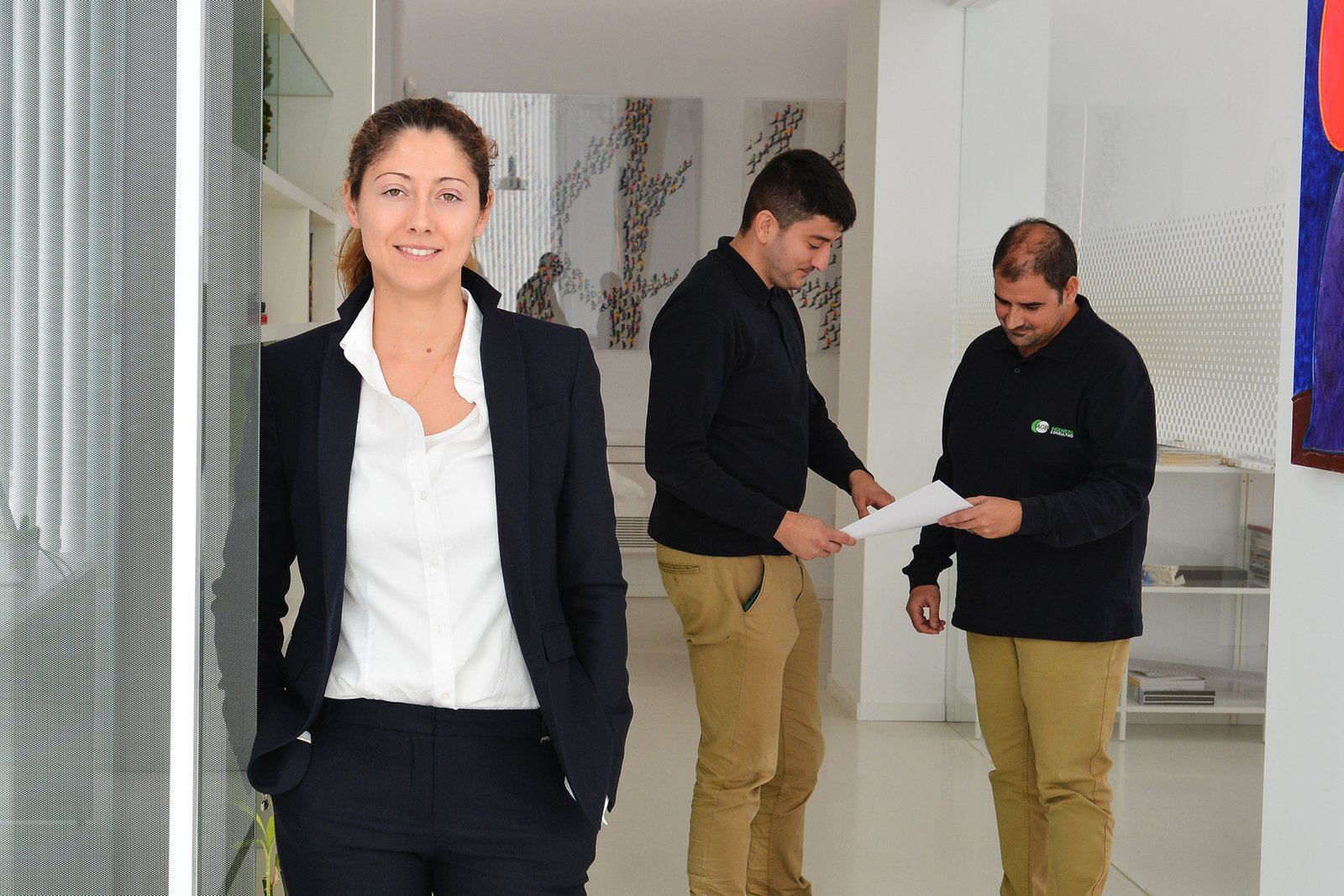
By Ana González, CEO and Agricultural Engineer – Industrial consultant in energy efficiency and grant management at AGB Ingeniers
In any FEADER grant project there is a visible part and another that is hardly ever told. The visible part is the investment: the new machine, the refrigeration upgrade, the automation of a line, the energy installation, the digitalization, or the industrial retrofit that will make it possible to produce better. The less visible —but decisive— part is the “how” that investment is executed and, above all, with whom. Because FEADER is not only financial support; it is a requirement for technical, documentary, and operational coherence. And within that requirement, the company’s partners (machinery manufacturers, installers, integrators, specialized engineering firms, and technical services) are not secondary actors. They are part of the outcome.
I say this clearly because I have seen it too many times: good projects that become complicated because a supplier does not understand the framework of a grant, and projects that flow because the partner is aligned from day one. When we talk about FEADER Grants integrating partners into the process is not an administrative detail. It is a condition for the project to be defensible, executable, and justifiable.
FEADER does not fund “purchases”, it funds projects
Although each call has its nuances, the pattern repeats: FEADER values investments that generate real improvement, that can be explained technically, and that can be demonstrated. And for that, the project must work as a continuous thread: from the industrial need to implementation, including quotes, technical report, timelines, evidence, and results.
That thread breaks when the supplier works “in their own world.” When they deliver a generic offer, when they do not define scope, when they change the equipment on the fly without reflecting it, when documentation arrives late, or when commissioning is not properly certified. By contrast, the thread is strengthened when the partner understands that their role does not end with selling or installing: their role also includes providing clarity and traceability for what has been done.
That is why, at AGB Ingeniers we insist on one idea: in FEADER, the supplier is not just a supplier, they are a project partner.
What it means to “integrate” the partner within FEADER
Integrating does not mean adding more people to meetings. It means the manufacturer or installer works with the same map as the company and the application file. It means they understand the objective, the scope, the reason for the investment, and what evidence will be needed later. It means their documents speak the same language as the technical report.
In practice, this is reflected in very concrete things. It shows in quotes issued with coherent technical descriptions, with reasonable breakdowns, clear terms, and no ambiguities. It shows in scope that is well defined and not open to interpretation. It shows in change control: if equipment is modified, it is justified and documented. It shows in installation and commissioning being certified in an orderly manner. And it shows in the partner understanding the schedule and critical dates: what can be executed, when, how, and with what evidence.
When that happens, the project becomes stronger. And when it doesn’t, the company is left alone trying to technically “translate” what has been done, sometimes too late, when deadlines are tight.
In the fruit and vegetable sector and agri-industry, the partner is everything
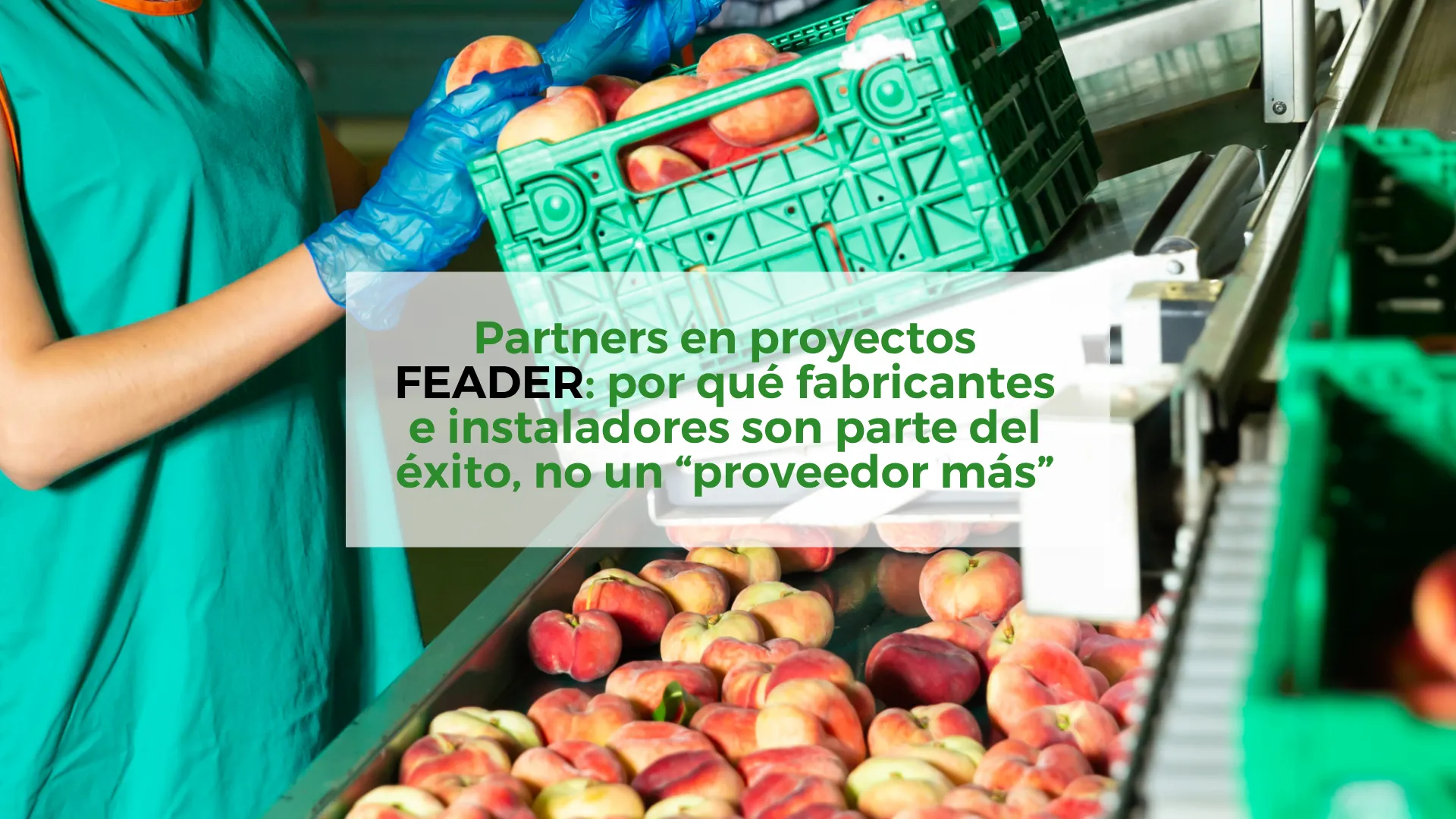
In fruit and vegetable packinghouses, for example, the partner’s impact is enormous. A manufacturer of washing and grading lines doesn’t only provide machines; they provide process logic. A machine-vision integrator doesn’t only install cameras; they install a quality-control system that must be described and validated. A refrigeration installer doesn’t only mount equipment; they leave a system that must operate stably and whose performance will be part of the result. And an automation provider doesn’t only wire a panel; they connect a part of the process that, if not well parameterized and documented, generates incidents and doubts.
In agri-industry, we are almost always talking about investments that integrate into a living ecosystem: production during campaign, shifts, peaks, reference changes, maintenance, audits, traceability, and customer requirements. That is why the partner must understand that “installing” is not enough. You have to implement, stabilize, and leave evidence.
The biggest mistake: requesting quotes as if they were “just prices”
If there is one area where grant applicants struggle most, it is the budget. And here the partner is the protagonist. Many companies request quotes quickly, with imprecise descriptions, and receive offers that work to buy… but not to build an application file. Offers with generic concepts, no scope, no breakdown, ambiguous terms, or line items that are difficult to justify.
In FEADER this is a risk. Not because the equipment isn’t valid, but because the documentation doesn’t support it. When the file competes or when justification requires coherence, a weak quote becomes a problem that appears at the worst time.
The solution is simple but requires method: the budget must be coherent with the project, and the partner must understand what level of detail is needed. This is not bureaucracy. It is about making the project defensible.
Execution: where peace of mind is won or lost
There is a moment when everything is decided: execution. In FEADER Grants execution is not “doing it” and that’s it. Execution implies leaving traceability. It implies being able to prove that what was installed matches what was requested, that the scope was fulfilled, and that the investment makes industrial sense.
Here, partners matter more than it seems. Installation quality, commissioning, tests, adjustments, training, final documentation, certificates… all of that determines whether a company experiences the project with peace of mind or with last-minute urgencies.
At AGB Ingeniers we see it very clearly: when the partner is aligned, the company moves forward without surprises. When they aren’t, the project becomes a last-minute race to obtain documents, justify changes, or explain what was not explained at the time.
The role of AGB Ingeniers: technical coordination and an application-file mindset
In FEADER Grants projects our value is not in “handling a formality.” It is in connecting two worlds that sometimes don’t speak well to each other: the world of the plant and the world of the application file. We coordinate the project so it is coherent from the start: what is to be done, with which partners, how it is described, how it is executed, and how it will be justified.
And this is where integrating partners becomes strategic. We work with manufacturers and installers to align budget, scope, timeline, and deliverables. We request what is needed, organize it, and connect it to the technical report. Because the partner has technical knowledge of the equipment, and we have the overall project view and documentary coherence mindset. When both work in the same direction, the result is much stronger.
Being prepared also applies to partners
In FEADER Grants being prepared means winning. And that includes being prepared with partners: selecting them on time, defining scope, requesting coherent offers, planning execution, anticipating certifications, and preparing from the start what will have to be proven at the end.
If your company is thinking about applying for FEADER Grants my recommendation is clear: don’t wait for the call to be published to involve partners. Start earlier, with criteria. Choose suppliers who understand industry, who work with documentary rigor, and who commit to the complete project, not just the sale.
Because when FEADER becomes active, the important thing won’t be to rush. The important thing will be to have a solid project, an aligned team, and partners who add value. And at that point, the grant stops being a formality and becomes what it really is: a lever to improve the company with guarantees.